
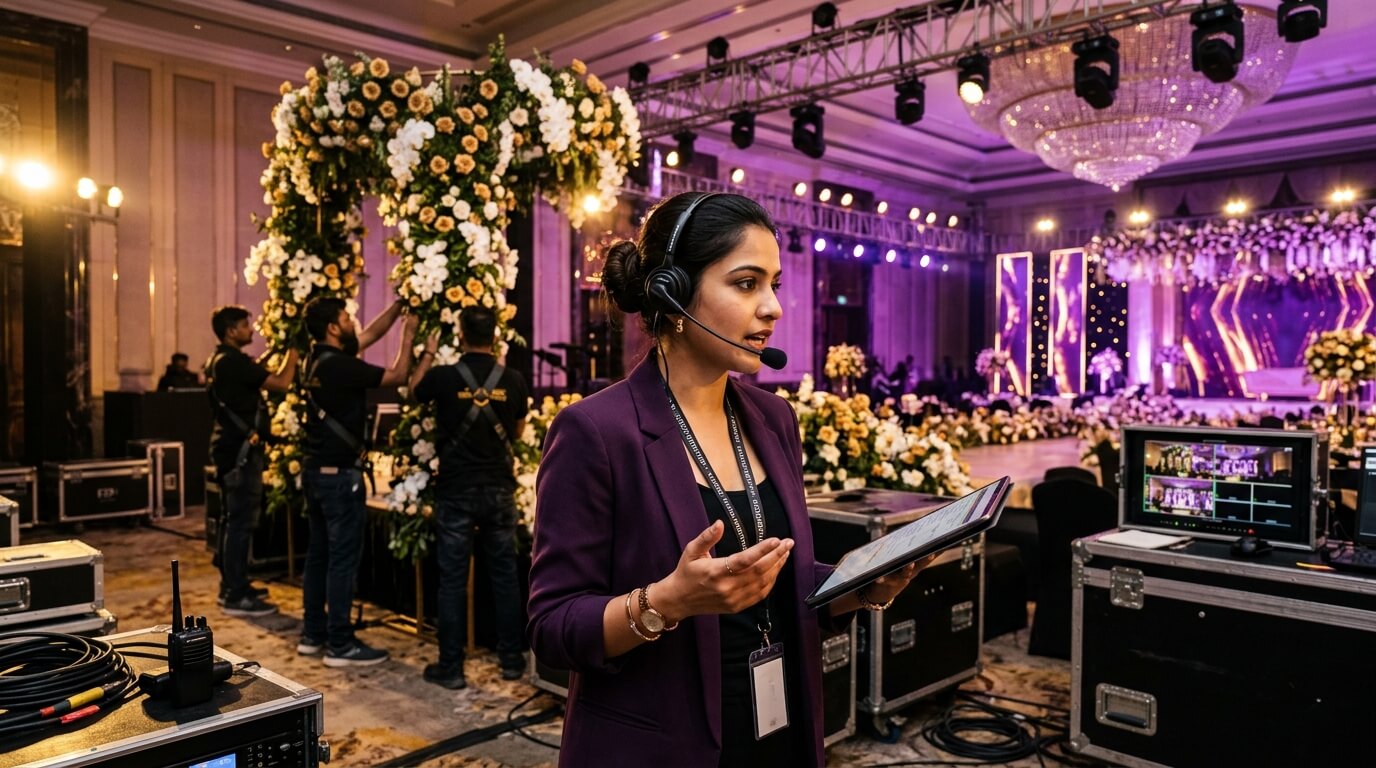
Event Planning Career: The Gen Z Reality Nobody Talks About
Last month, a 21-year-old event planner in Mumbai earned ₹80,000 from a single wedding weekend.
Not from Instagram sponsorships.
Not from influencing.
Not from some viral startup.
From solving problems.
At 10 a.m., the guest count suddenly doubled. By afternoon, the caterer backed out. Two hours later, the floral palette changed because the bride hated the original colors in natural lighting. By evening, the sound system failed during setup.
Guests never noticed any of it.
That is the strange beauty of the event industry. When event planners do their job perfectly, nobody realizes how close everything came to collapsing.
And yet, most people still think event planning is just decoration, party selfies, and celebrities walking on red carpets.
It is not.
Behind the scenes, event management is one of the most intense combinations of business, psychology, operations, sales, creativity, and crisis management happening in modern India.
And Gen Z is entering this industry faster than ever.
Yes, an event planning career in India can become highly rewarding financially and creatively if you develop real execution, client handling, and backend planning skills. The industry is growing rapidly through weddings, experiential marketing, concerts, and corporate events — but it is not a glamorous shortcut career.
In this article, we break down the salary reality, career growth, pressure, specializations, and the real truth behind event planning careers.
Why Is Gen Z Suddenly Choosing Event Planning Careers?
The event industry fits Gen Z psychology almost perfectly.
- Fast-paced work.
- Creative freedom.
- No repetitive office routine.
- Social interaction.
- Content creation.
- Personal branding.
- Flexible career paths.
But there is another reason nobody talks about enough.
Traditional career certainty is collapsing.
Engineering jobs are becoming hyper-competitive. AI is reshaping repetitive desk jobs. Corporate burnout is happening earlier than ever. Meanwhile, India’s event and experiential industry is expanding aggressively through weddings, sports leagues, creator events, luxury hospitality, brand activations, and live entertainment.
According to industry projections discussed across the 2024 experiential marketing ecosystem, India’s event industry continues to grow rapidly as brands invest heavily in physical experiences instead of only digital advertising.
And this changes everything for young professionals.
What most people don’t realize is that event management is no longer “side work.” It has become a serious business ecosystem involving:
- Hospitality
- Influencer marketing
- Luxury design
- Experiential branding
- Production technology
- Creator economy partnerships
- Corporate communications
- Venue management
Events stopped being parties years ago. Today, they are emotional business experiences.
Behind the scenes, the smartest Gen Z professionals are not entering events because it looks glamorous.
They are entering because they understand where human-driven industries are heading.
And this is where most outsiders completely misunderstand the profession.
How Much Salary Can You Earn in an Event Planning Career?
The earning structure in event planning looks completely different from traditional jobs.
This is the first shock most students experience.
Unlike corporate salaries, event planners often earn from multiple income streams simultaneously.
| Income Source | Typical Range |
|---|---|
| Beginner salary | ₹20,000–₹35,000/month |
| Freelance project fees | ₹10,000–₹1 lakh+ |
| Vendor commissions | ₹5,000–₹50,000/event |
| Brand collaborations | ₹10,000–₹2 lakh |
| Client consultation fees | ₹5,000–₹25,000 |
| Wedding planning retainers | ₹50,000–₹10 lakh+ |
A beginner may start modestly. But growth can become aggressive once reputation builds.
For example:
- Year 1 → assisting senior planners
- Year 2 → handling smaller independent events
- Year 3 → managing premium weddings or corporate projects
- Year 4–5 → specialization or launching an agency
And specialization changes income dramatically.
A wedding planner handling luxury destination weddings earns differently from someone coordinating local banquet functions.
A corporate event strategist managing experiential launches for tech brands operates at an entirely different pricing level.
From our experience at Events Expert Academy, students often underestimate how relationship-building directly affects income in this industry.
Because clients rarely pay only for décor.
They pay for peace of mind.
In events, the real product is not decoration. It is trust under pressure.
And pressure is exactly where the real industry reveals itself.

What Does an Event Planner Actually Do Behind the Scenes?
Event planners are basically professional chaos managers.
That sounds dramatic. Until you see one event day in real life.
Here is what an actual wedding execution timeline can look like:
| Time | Reality Behind the Scenes |
|---|---|
| 10:00 a.m. | Guest count suddenly changes |
| 12:00 p.m. | Caterer delays setup |
| 1:00 p.m. | Bride requests floral redesign |
| 3:00 p.m. | Vendor payment dispute starts |
| 5:00 p.m. | Rain backup activated |
| 6:30 p.m. | LED wall technical issue |
| 7:00 p.m. | Event begins perfectly |
Guests see elegance.
Event planners see 500 invisible decisions.
This is why event management is far more operationally intense than social media makes it look.
Behind the scenes, planners constantly handle:
- Vendor coordination
- Client psychology
- Budget control
- Timeline management
- Production troubleshooting
- Hospitality flow
- Team leadership
- Last-minute crisis handling
And the emotional pressure is real.
Because events are deeply emotional environments.
Weddings involve family expectations. Corporate launches involve brand reputation. Concerts involve crowd energy and public safety.
There are no “pause buttons” once guests arrive.
The audience remembers magic. Event planners remembers the panic behind it.
From our experience executing weddings through Smile Events, the biggest challenge is rarely décor or logistics.
It is emotional management.
Calming nervous brides. Handling unrealistic relatives. Negotiating vendor egos. Keeping exhausted teams motivated at 2 a.m.
That invisible emotional labor is the part Instagram never shows.
And honestly?
That is what separates professionals from hobbyists.

Is Event Management Stressful or Exciting?
Both.
At extreme levels.
If you love routine, predictable hours, and fixed schedules, event planning will probably frustrate you quickly.
Because this industry rewards adaptability more than comfort.
Weekends become workdays.
Festivals become peak season.
Your phone rarely stays silent during live execution.
But for the right personality type, this pressure becomes addictive.
You might genuinely love event management if:
- You enjoy solving problems fast
- You stay calm during chaos
- You like interacting with people
- You get bored with repetitive work
- You enjoy creating experiences
- You naturally organize things already
You may struggle if:
- Sudden changes stress you badly
- You dislike communication
- You need highly predictable schedules
- You hate pressure environments
- You dislike teamwork
This is why is event management right for you becomes such an important question before entering the industry seriously.
Because event management is not “easy creative work.”
It is operational intensity disguised as glamour.
People think events are about parties. Professionals know they are about pressure.
And yet, that pressure creates something strangely fulfilling.
No two days feel identical.
No two clients behave the same.
No two events unfold exactly as planned.
Which is exactly why many Gen Z professionals feel more alive in this industry than in traditional office environments.
But career growth only happens when skill depth increases.
And this is where specialization becomes critical.
Which Event Management Specialization Pays the Most?
General event planners survive.
Specialists dominate.
This is one of the biggest truths in the industry.
After 2–3 years, most successful professionals naturally move toward specialization.
| Specialization | Nature of Work | Income Potential |
|---|---|---|
| Luxury Weddings | Emotional, high-budget clients | Very High |
| Corporate Events | Brand launches, conferences | Stable + High |
| Celebrity Management | Talent coordination | High |
| Experiential Marketing | Brand activations | Fast-growing |
| Concerts & Festivals | Live entertainment | High pressure |
| Destination Weddings | Travel + hospitality | Premium |
| Sports Events | Large-scale operations | Expanding rapidly |
| Virtual/Hybrid Events | Digital + live production | Future-focused |
For example, the massive Ambani pre-wedding celebrations in 2024 showcased how large-scale event ecosystems now operate almost like mini-cities with logistics, hospitality, artist coordination, transportation, fabrication, and live production all functioning simultaneously.
That level of execution requires specialists — not generalists.
What most people outside the industry never see is how many invisible departments exist inside one “event.”
- Lighting teams.
- Set fabrication.
- Show calling.
- Hospitality flow.
- Guest logistics.
- Artist management.
- Production design.
- Technical direction.
And every specialization opens different income ceilings.
This is why many students at Events Expert Academy spend their first phase exploring multiple departments before committing to one specialization path.
Because choosing too early without exposure is risky.
And this is where most students get trapped by social media assumptions.
How Do You Start an Event Planning Career in India?
The fastest way to grow in this industry is to start early.
Not perfectly.
Early.
There are typically three entry paths:
| Path | Best For |
|---|---|
| Diploma after 12th | Students ready for practical learning |
| Graduation + event course | Students wanting backup degree |
| Start learning alongside studies | Fastest practical exposure |
From a real-world perspective, the third option often creates the strongest long-term growth.
Because event management rewards experience accumulation aggressively.
The earlier you start:
- Vendor networking
- Client communication
- Production understanding
- Event observation
- Budgeting
- Crisis management
…the faster your confidence compounds.
This is why modern students increasingly choose:
- online event management course in India
- hybrid event management course
- diploma in event management Mumbai
Because flexibility matters now.
Students want learning systems that combine:
- Practical execution
- Online education
- Mentorship
- Portfolio building
- Career guidance
Not just theoretical classrooms.
Event management is not a subject you memorize. It is a pressure game you learn by playing.
And that changes how education itself needs to work.
What Skills Matter More Than Degrees in Event Management?
Degrees help.
Skills build careers.
That is the reality.
The most successful event professionals often become valuable because of practical abilities like:
- Communication
- Budgeting
- Vendor handling
- Presentation skills
- Problem-solving
- Negotiation
- Technical understanding
- Leadership
- Hospitality instincts
Even basic tools matter:
- Canva
- PowerPoint
- Excel
- Notion
- Trello
- Basic video editing
- Social media content creation
And honestly?
Gen Z already has a major advantage here.
Most young people already understand:
- Content psychology
- Reels culture
- Social storytelling
- Visual aesthetics
- Digital communication
That makes modern event education very different from traditional education.
Which is exactly why why event management is a big deal has become more relevant than ever in India’s creator-driven economy.
Because the industry itself is evolving rapidly.
And the professionals evolving with it are the ones building serious long-term careers.


What Most Parents Still Don’t Understand About Event Careers
Most parents still judge event management using outdated assumptions.
They see parties.
Professionals see business infrastructure.
One successful event activates:
- Hotels
- Makeup artists
- Caterers
- Designers
- Photographers
- Fabricators
- DJs
- Production crews
- Hospitality staff
- Transportation teams
A single premium wedding can financially impact dozens of vendors in one weekend.
This is not a “timepass industry.”
It is an economic ecosystem.
And emotionally, event management changes people too.
Students become:
- More confident
- Better communicators
- Stronger decision-makers
- More adaptable under pressure
- More socially intelligent
What most parents don’t realize is that event management quietly teaches business leadership faster than many traditional careers.
Because when you manage live events, you manage:
- Money
- People
- Time
- Emotions
- Pressure
- Reputation
Simultaneously.
The event industry does not build perfect people. It builds resilient people.
And resilience is becoming one of the most valuable skills of this generation.
Frequently Asked Questions
Yes, the industry has become increasingly stable due to growth in weddings, experiential marketing, concerts, hospitality, and corporate events. However, stability comes from building strong skills and professional reputation over time.
Beginners usually earn between ₹20,000–₹35,000 per month initially. Income can increase rapidly through freelance projects, commissions, and specialization.
Yes, event management can be highly stressful during live execution. But many professionals enjoy the pressure because every project feels dynamic, creative, and emotionally rewarding.
Luxury weddings, corporate events, experiential marketing, and destination weddings currently offer strong growth opportunities in India. The best specialization depends on your personality and strengths.
Not always. Practical exposure, mentorship, networking, and execution skills often matter more than formal degrees in this industry.
Yes, but communication and people handling still matter. Many introverts succeed through strong planning, organization, and backend operational skills.
Try planning a small real-world event yourself. If you enjoy the planning process, coordination, and problem-solving more than just attending the final party, you may genuinely enjoy the industry.
Final Thoughts
The event industry is not for everyone.
And honestly, that is exactly why the right people thrive inside it.
Because event planning rewards something rare — people who stay calm while the world around them becomes unpredictable.
It rewards adaptability. Emotional intelligence. Leadership under pressure. Creativity mixed with business thinking.
Yes, the industry looks glamorous from the outside.
But behind the lights, flowers, music, and celebrity entries are professionals making thousands of invisible decisions every single hour.
That is the real career.
Not just parties.
Not just selfies.
Not just aesthetics.
Execution.
The event industry does not wait for perfect confidence or perfect timing. It rewards people willing to learn, observe, adapt, and grow through real experience. If this article made you realize that your personality might actually fit this world — then the next step is not chasing glamour. It is finding mentors who teach the business behind the beauty.

Your Career In Events Starts Here
India's most practical event management training. Real events. Real earnings. Real industry connections.